
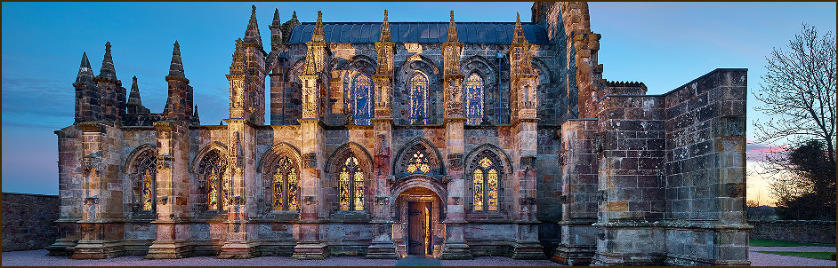
Capilla de Rosslyn is located just six miles
south of Edinburgh, the ancient capital of
Scotland.
Built in the fifteenth century by William Sinclair,
the Earl of Rosslyn, Niven Sinclair states that
William “built the Rosslyn Chapel” at a time when
books could be burned or banned, so he left a
message for posterity carved in stone. It is
claimed that William’s grandfather made a voyage
to America almost a century before Christopher
Columbus.
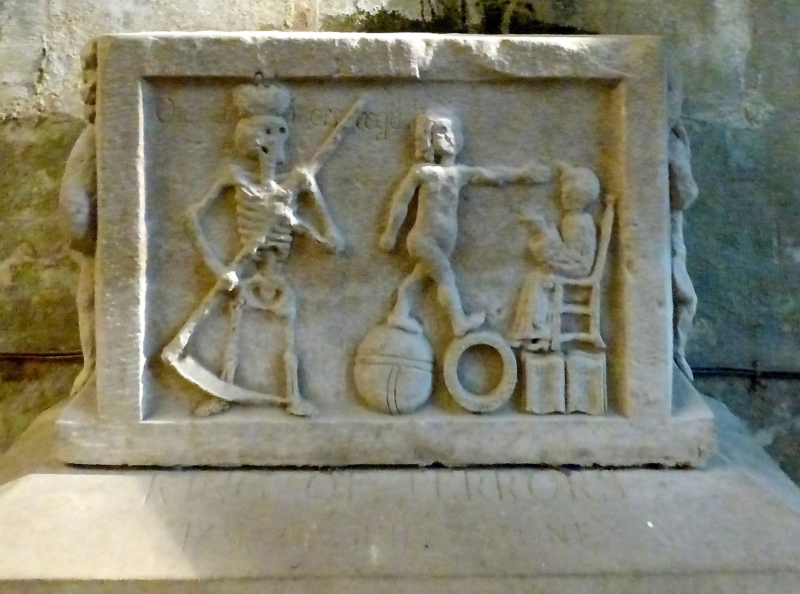
The interior is a visual feast of carved stone that
one hardly knows where to begin. Foliage and
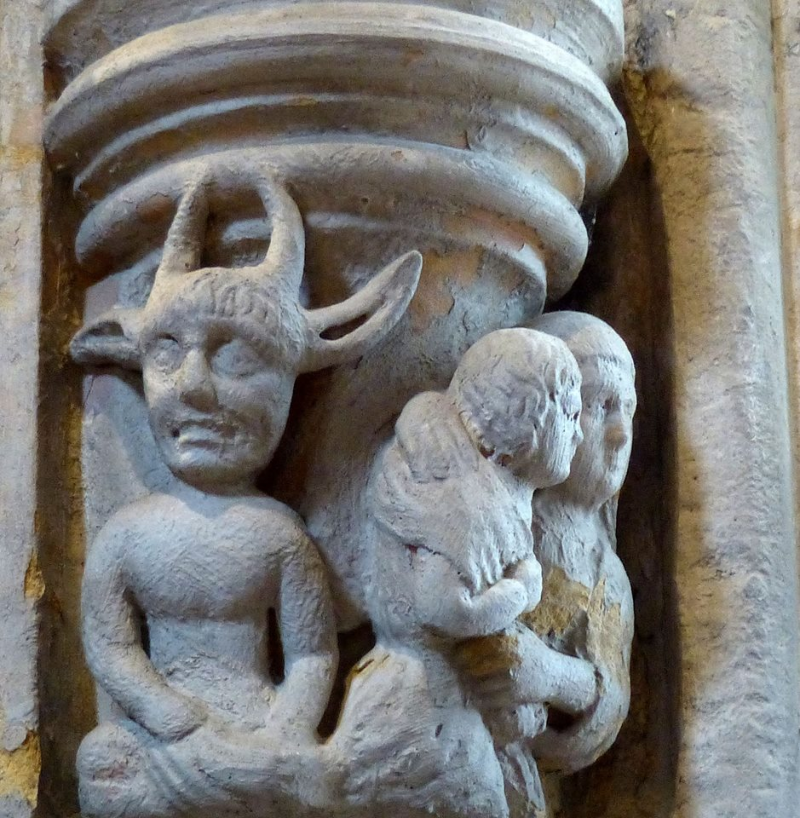
strange figures hang everywhere on the walls,
arches, and ceiling. The overall effect seems
clearly intended to be Christian, but a keener
inspection reveals that many carvings have
symbolic origins in very different ideologies, some
decidedly pagan.
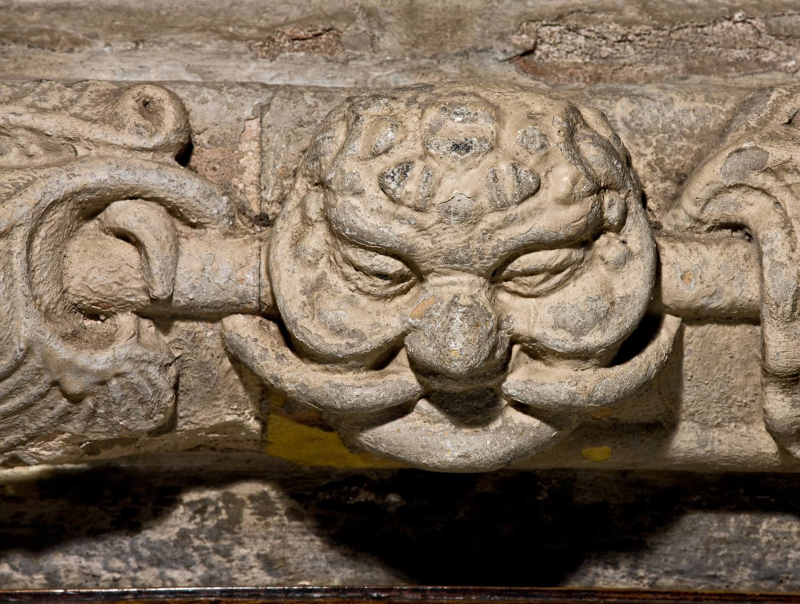
There lies the head of a “green man,” an ancient
Celtic god of vegetation, gazing from within the
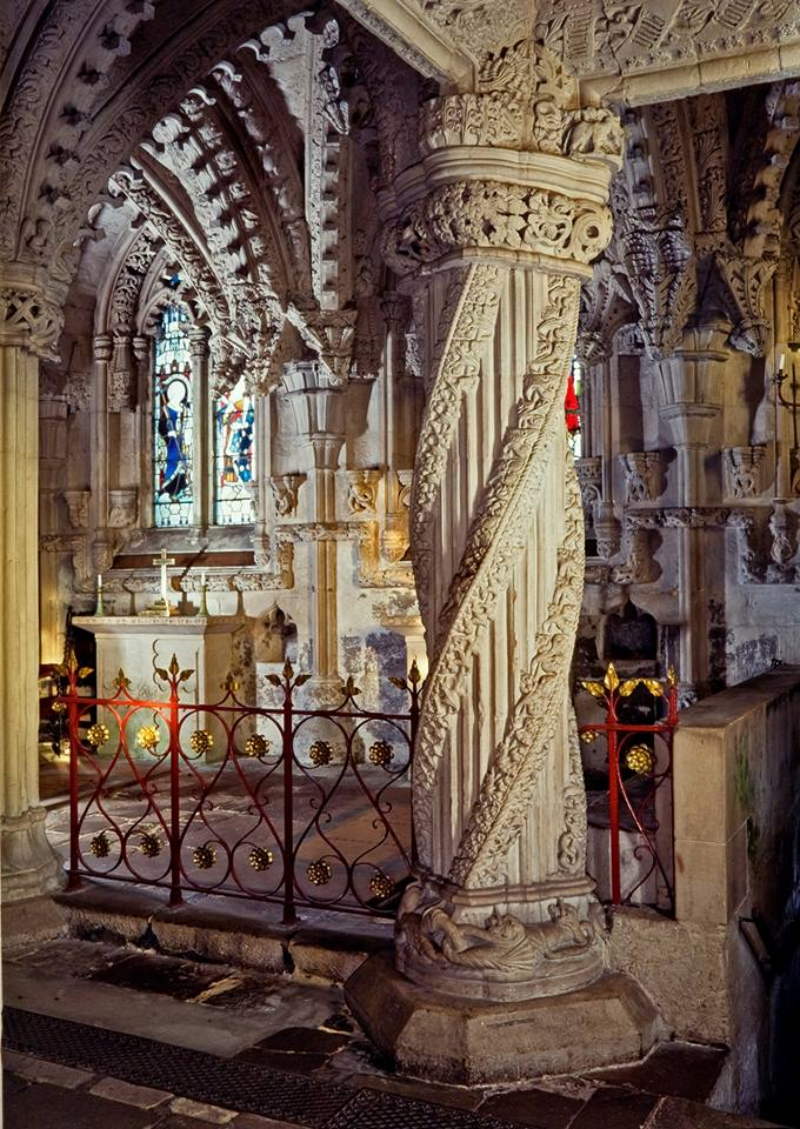
carved foliage, and over Rosslyn’s most famous structure, the
“Apprentice Pillar,” a chain-link of dragons nibbling
at the roots of what has been interpreted as the
“tree of life.” There are also references to the
Hebrew Old Testament, and legends relating to
the Templars and Masonic tradition.
Let us walk to the center of the chapel and look
up; the grand Rosslyn vaulted ceiling is divided
into five sections. Four of them have a floral
theme. But the fifth section is different from the
others. Instead of flowers, it is full of stars!
In one corner a bearded head with the hand
raised open at the side. Niven Sinclair has
described it as the head of Christ with his hand
raised in blessing. Three rows above Christ’s
head are the “sun in all its splendor,” and at the
top, from the adjoining corner of the starry
vault, sits the moon emerging.
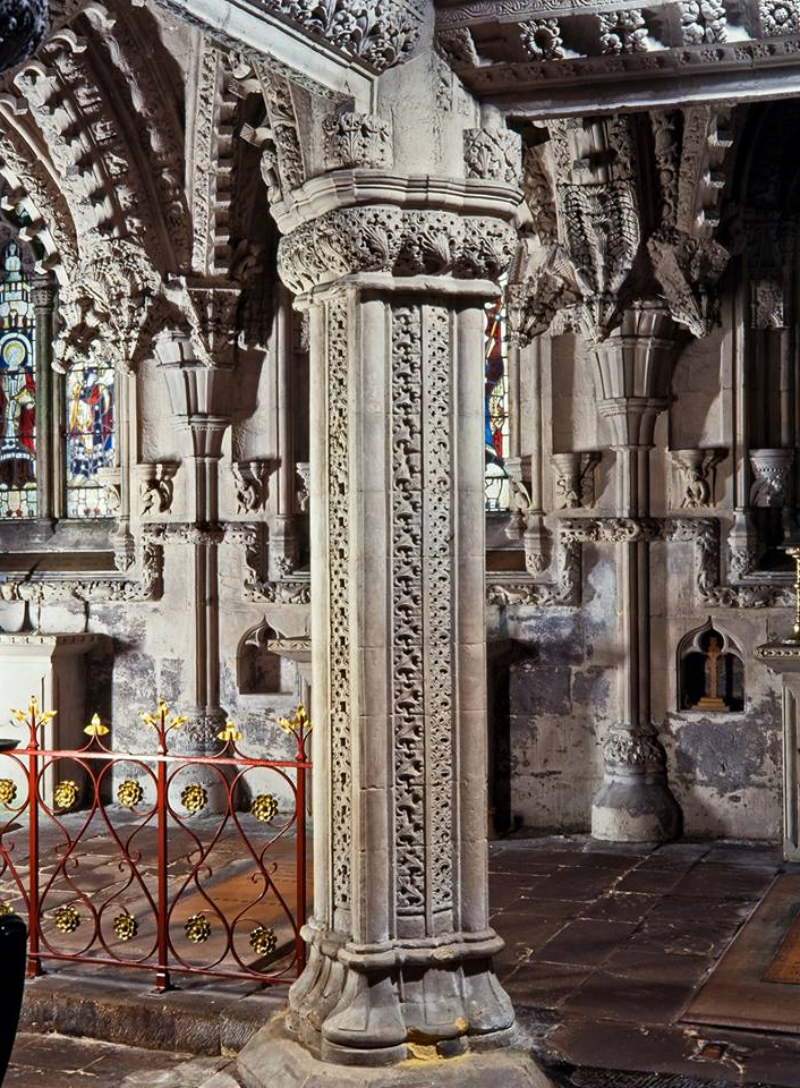
Toward the eastern end of the chapel lie two
pillars that together form the base of what has
made Rosslyn the most enduring legend of a
mason’s apprentice being killed by his master.
The legend says that the master mason, who had traveled to Rome
to study the form of a pillar he intended to duplicate at Rosslyn,
upon returning found that his apprentice, inspired by a dream, had
completed the work before him. In a fit of jealousy, the master
struck and killed his apprentice with a single blow to the head.
While the two pillars are worthy of admiration, the Apprentice Pillar
clearly eclipses the Master’s.
Rosslyn Chapel was founded on Saint Matthew’s Day, September 21,
1446, and officially dedicated to this saint on the same day in 1450.
September 21 marks the autumnal equinox, when the sun rises
precisely east of Rosslyn.
In general it is claimed that the chapel was built by the Templars,
who, on Friday the 13th of October 1307, while pursued by King
Philip IV of France and Pope Clement V, managed to escape with
their fleet carrying the Templar treasure and the secrets of the
temple, arriving in Scotland where they aided King Robert I in his
battle for independence against the English
ROSSLYN CHAPEL

RVM