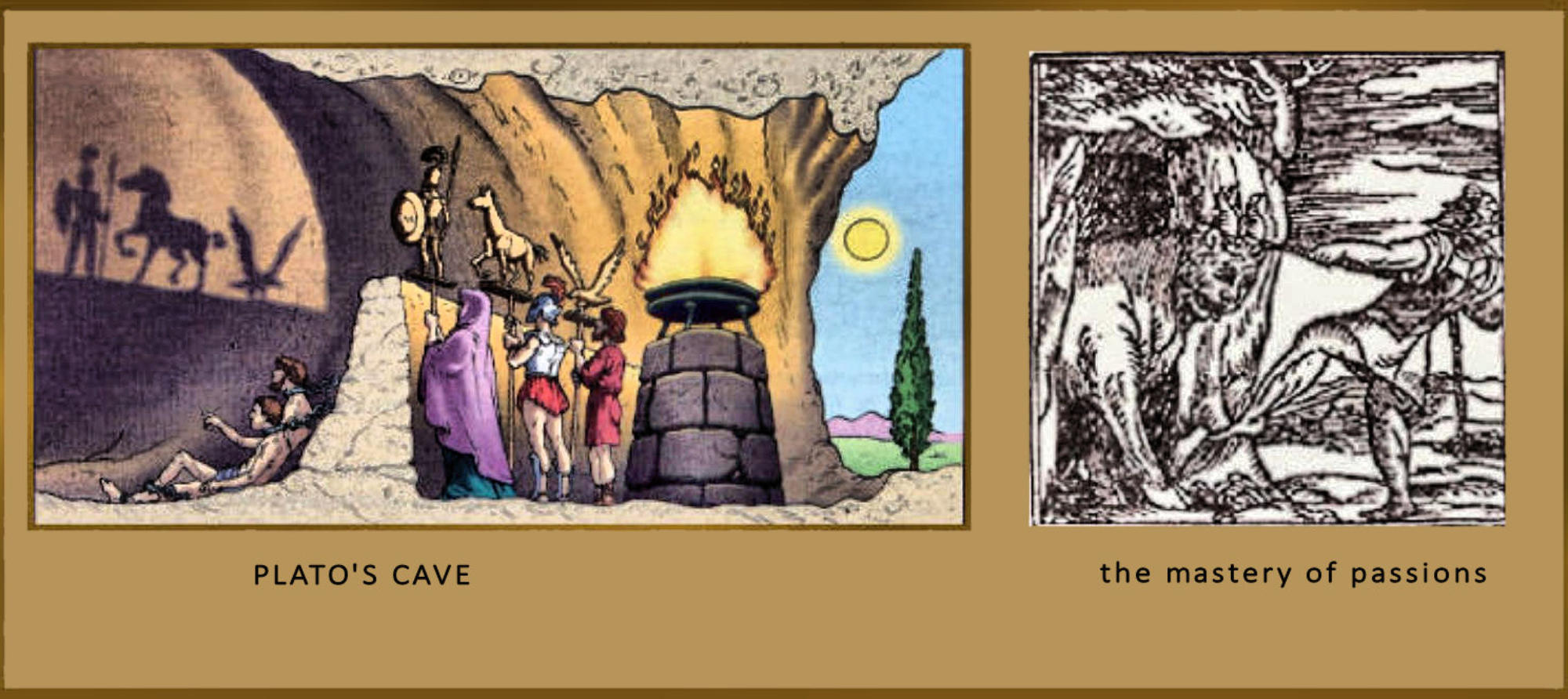

Symbolically
equivalent
to
grotto,
or
cave,
from
the
Greek
Kruptos
"hidden",
birthplace
of
gods
and
goddesses.
Also
used
as
places
of
worship,
they
still
survive
today
in
the
architecture
of
the
apses
of
Roman
churches.
In
many
initiation
traditions,
the
rites
begin
with
an
entry
into
a
cavern,
from
which
monsters
emerge,
signifies
the
world
of
the
unconscious,
of
which
the
human
being
is
a
prisoner,
for
in
its
depths
we
confine
all
that
we
are
unable
to
assimilate.
Those
who
want to see the light must enter the cave and confront its monsters.
The
goddess
Cybele,
of
Phrygian
origin,
is
described
as
an
androgynous
deity
who
emerged
from
the
earth,
her
cult
was
celebrated
in
caves
and
was
linked
to
fertility,
so
caves
and
caverns
were associated with the female womb, as a symbol of fertility.
In
paintings,
when
a
cave
is
depicted
with
water,
it
alludes
to
life,
without
water
and
with
a
candle
almost
consumed
or
a
skull
in
the
ground
refers
to
death.
A
cave
with
one
or
more
animals
and
a
person
facing each other is an allegory of death.
The
best-known
allegory
of
the
cave
is
of
Plato
(428
BC),
Greek
philosopher,
disciple
of
Socrates
and
teacher
of
Aristotle,
describes
a
cave
in
Book
VII
of
the
Republic,
and
on
a
wall
facing
the
interior
there
are
some
people
bound
from
birth,
so
that
they
can
only
see
the
bottom
of
the
cavern.
Behind
the
wall
there
is
a
fire,
symbolising
the
light
of
knowledge
and
some
people
projecting
Chinese
shadows
on
the
wall,
this
is
the
only
thing
the
prisoners
can
see,
and
they
take
these
shadows
as
reality,
for
they
have
known
nothing
else
in
all
their
lives.
One
day
one
of
these
prisoners’
escapes
and
coming
out
of
the
cave
he
sees
that
there
is
another
reality,
he
goes
back
and
explains
it
to
his
companions who mock him and don't want to accompany him.
The
shelter
of
the
cave
and
the
regret
of
the
unknown,
don’t
allow
them
to
move
even
if
their
chains
are
cut
off.
This
allegory,
examined
from
an
epistemological
point
of
view,
is
a
metaphor
for
the
human
being
and
the
society
around
him,
perfectly
applicable
to
today's
world,
where
humanity
is
represented
by
the
prisoners,
lined
up
and
held
by
the
chains
of
their
own
ignorance,
and
the
false
convictions
inculcated
by
the
shadows
cast
by
certain
media,
dominated
by
ideological
interests.
As
J.
Goebbels
said,
a
lie
repeated
a
thousand
times
becomes
the
truth.
Survival
does
not
allow
us
to
stop
for
a
moment
to
analyse
each
news item and find out its real meaning.
PLATO’S CAVE







































































RVM