
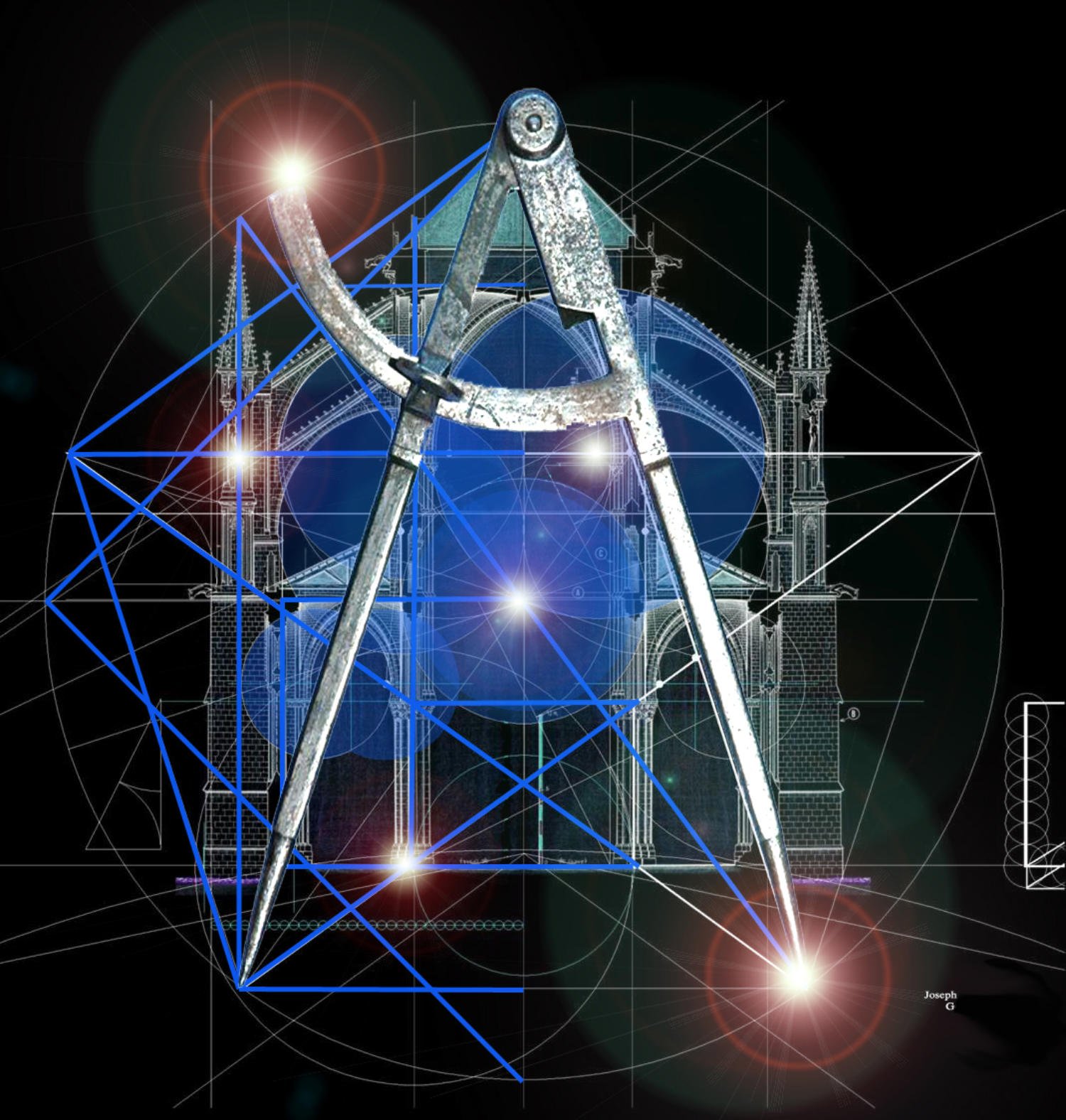
Fig. 1: Section of the central nave. Reims Cathedral. Harmonic layout “Ad Pentagonum”
(Drawing: © Josep Gonzàlez).
“...
there
was
a
time
in
the
so-called
Middle
Ages
when
human
beings
knew
themselves
capable
of
emulating
the
grandeur
of
Creation,
and
that
was
possible
because
a
few
enlightened
ones
found
the
harmony
of
proportion
thanks
to
a
simple
mathematical relation which they called the number of God.”
The Number of God
José Luis Corral
In
the
history
of
Ideas,
as
in
that
of
Art,
the
search
for
harmony
and
for
the
geometric
patterns
that
govern
the
Beautiful
has
been,
and
remains,
the
“Leitmotiv”
of
a
great
part
of
artistic
speculation.
It
is
an
ontological
concern
that
drives
man
to
seek
and
discover
the
complex
fabric
that
builds
and
constitutes
the
“World”.
For
generations,
ever
since
the
primordial
offspring
emerged
from
the
caves,
man
has
counted,
gathered
and
serialized,
consciously
and
unconsciously,
the
rhythms
of
nature.
And,
emulating
the
Gods,
he
has
built,
in
his
own
image
and
likeness,
evocations
of
the
Logos.
He
has
raised
Architectures
which,
before
being
made
of
stone,
were
manifestations
of
that
ancient,
saturnine
pulse
that
governs
the
universal
order
of
things.
Hence,
throughout
the
ages,
humanity
has
discovered
physical
and
metaphysical
tools,
such
as
mathematics
and
number.
And
through
them
it
developed
the
powerful
divine
acquiescence of Geometry, also called the language of God.
For
what
is
the
divine
if
not
Geometry?
And
it
is
through
this
speculation
on
the
invisible
order
that
nature
generates
that
the
architecture
of
the
“beautiful”
is
materialized.
“The
Beautiful
is
the
splendor
of
the
True,”
Plato
tells
us,
and
he
asserts
that
the
substance
that
generates
all
things
speaks
to
us
in
the
language
of
geometry,
and
we
might
infer,
of
“Reason”.
For
it
is
through
“proportion”,
which
is
ratio
and
analogy
between
numbers,
that
the
intelligible
manifests
itself
to
us
as
a
transcendent
moral
beauty:
“…we
confer
upon
the
mathematical
sciences
the
dialectical
power
to
ascend
from
the
cave
to
the
light,
from
the
visible
to
the
intelligible,
from
the
senses
to
the
essence
by
means
of
intelligence.
By
these
arts
the
best
part
of
the
soul
can
be
raised
to
the
contemplation
of
the
best
of
beings:
the
Good.”
Likewise
for
Aristotle,
beauty,
which
is
the
manifestation
of
a
moral
and
transcendent
good,
consisted
of
magnitude
(μέγεθος)
and
order
(τάξις).
And
this
order,
or
“Taxis”,
is
what
governs
form,
which
is
the
appearance
of
things
and
in
which
perfect
proportions
are
found,
through
just
measure
and
symmetry,
or
rather,
analogy:
“...The
supreme
forms
of
Beauty,
for
their
part,
are
order,
proportion
and
magnitude,
which
the
mathematical
sciences
display
to
a
high
degree...”
.
That
is,
Harmony,
which
is
the
universal
relation
between
the
parts
and
the
Whole.
And
as
Plato
reminds
us:
“...it
is
impossible
to
combine
two
things
without
a
third;
a
relation
(Ratio)
between
them
is
needed
to
join
them
together.
The
best
bond
for
this
relation
is
the
Whole.”
And
the
relation
par
excellence
that
speaks
to
us
of
the
Whole
is
the
“Golden
Section”
or
“Divine
Proportion”.
A
sublime
relation
whose
quotient
was
given
precisely
the
name
Tomé,
that
is,
Section
(τομή),
whence
its
first
letter
was
the
τ
or
Greek
Tau,
which
curiously
uses
a
sign
identical
to
the
Egyptian
ideogram
reserved
for
the
concept
of
sky,
or
roof,
represented
by
a
lintel
supported by a T-shaped pillar.
Thus,
that
divine
number,
numerically
undesignable
because
it
is
irrational,
which
had
the
cherished
property
of
harmonizing
the
parts
of
things
with
one
another
and
of
keeping
the
same
proportion
between
them
and
the
Whole,
was
recognized
basically
by
its
geometric
description
and
by
its
sublime
properties
of
homothetic
and
infinite
growth.
This
is
the
number
that,
at
the
beginning
of
the
20th
century,
the
mathematician
Mark
Barr
would
rename
Phi,
φ,
in
honor
of
Phidias,
the
distinguished
author
of
the
sculptures
of
the
Parthenon,
and
which
most
of
us
know
by
the
name
given
to
it
by
the
Franciscan
sage,
friend
of
Leonardo
da
Vinci,
Luca
Pacioli:
“the
Divine
Proportion” .
This
proportion
has
countless
epithets
and
qualifiers
that
describe
it
throughout
history
as
that
ineffable
feat,
the
fruit
of
mathematics
and
pure
symbolism.
Its
strength
lies
in
its
inexhaustible
will
to
grow,
in
its
self-morphic
generation,
exact
and
beautiful
unto
itself,
capable
of
always
evoking
proportions
full of immaterial and infinite beauty.
DIVINE ARCHITECTURE
THE NUMBER OF GOD

RVM

Josep González García Medievalist Architect, MM.·.
FOLLOWING