

Philosophy and Western culture have their bases in ancient Greece,
about 2,500 years ago. Democritus postulated the composition of matter,
and Aristarchus of Samos, 200 years later, laid the foundations of
modern astronomy with the Heliocentric Theory, in contrast to those who
defended Geocentrism like Aristotle.


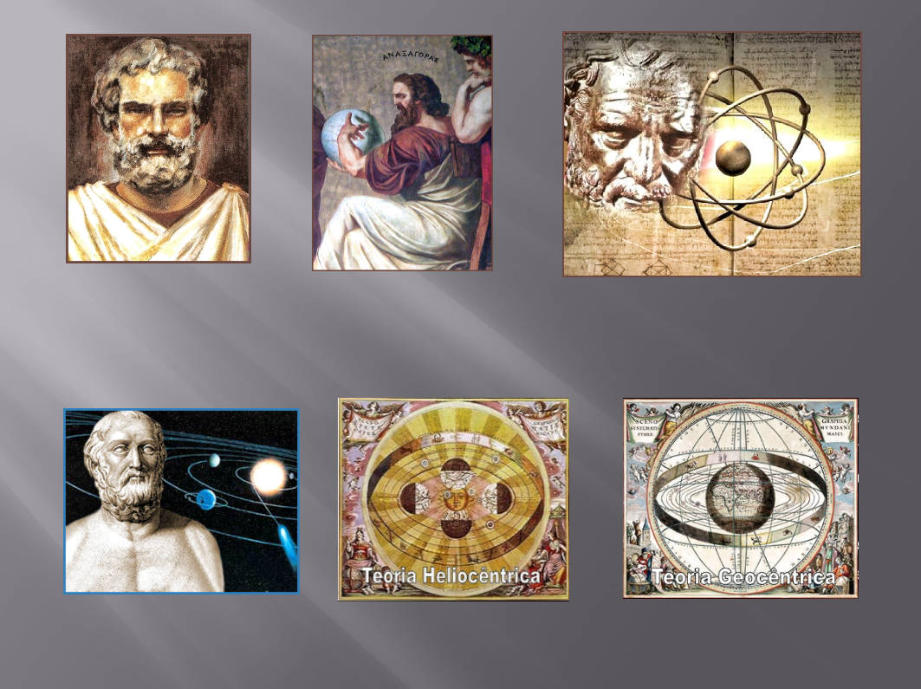
Tales de Mileto 625 aC
Anaxágoras 500 aC
Demócrito 460 aC
Aristarco de Samos 310 aC
Aristóteles 384 aC
Hiparco de Nicea 190 aC
Potolomeo 100 dC
Father of Western philosophy,
rational knowledge of the world
Nous or mind as a
fundamental element
Matter is composed of atoms;
physical changes are physical,
neither magic nor gods.
Heliocentric theory: he calculated the distance from the Earth
to the Sun and from the Earth to the Moon, as well as their diameters.
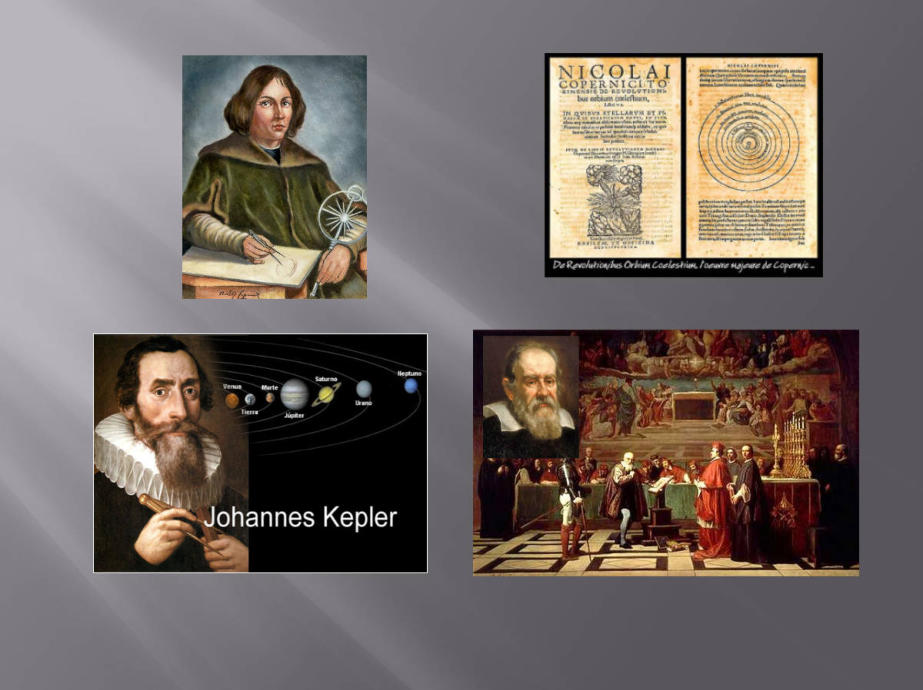
Nearly 1,700 years had to pass to continue the studies of Democritus
or Aristarchus of Samos. During this time, wars and the Catholic
Church with its repressive Holy Inquisition tribunal (remember
Giordano Bruno burned at the stake in 1600 and Galileo Galilei who
was nearly given the same fate, both for defending that the Earth
orbited the Sun) kept the people in absolute ignorance of
knowledge, and it was only from this Renaissance that humanity
began its development, and not without effort could we finally reach
the Age of Enlightenment.
Nicolás Copérnico
Poland, 1493–1543.
Publishes his theory
of heliocentrism
Johannes Kepler (1571-1630) laid the foundations
of universal gravitation.
Galileo Gagilei Italy, 1564–1642, defends the Heliocentric
theory against Geocentrism, which brought him before
the tribunal of the Catholic Church in the Inquisition.
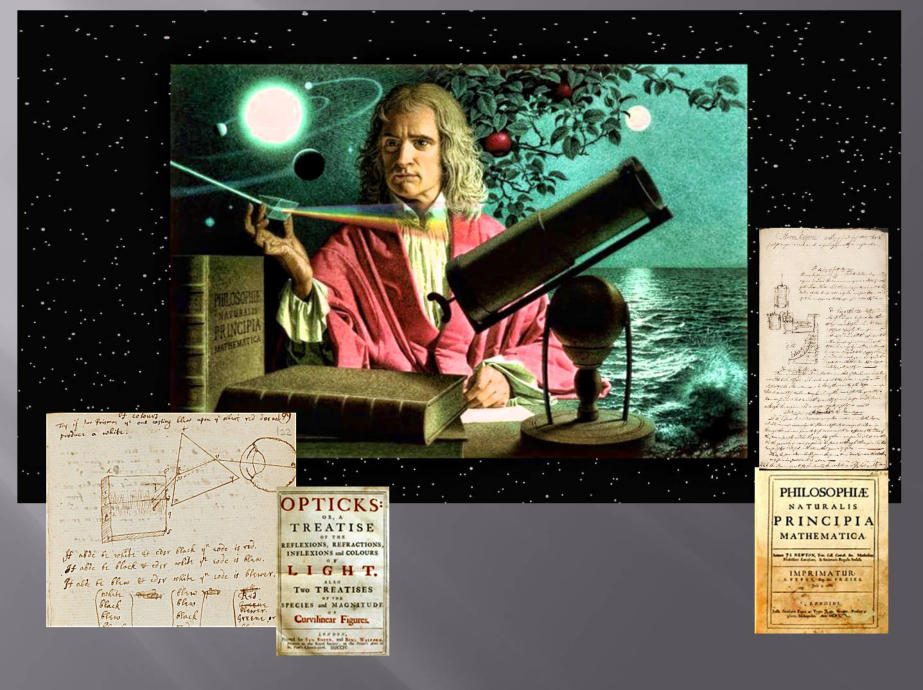
Isaac Newton Iglaterra 1643 1727
President of the Royal Society,
Alchemist, Arian philosopher, proponent
of the corpuscular theory of light.
Previous Following
SCIENCE

RVM