
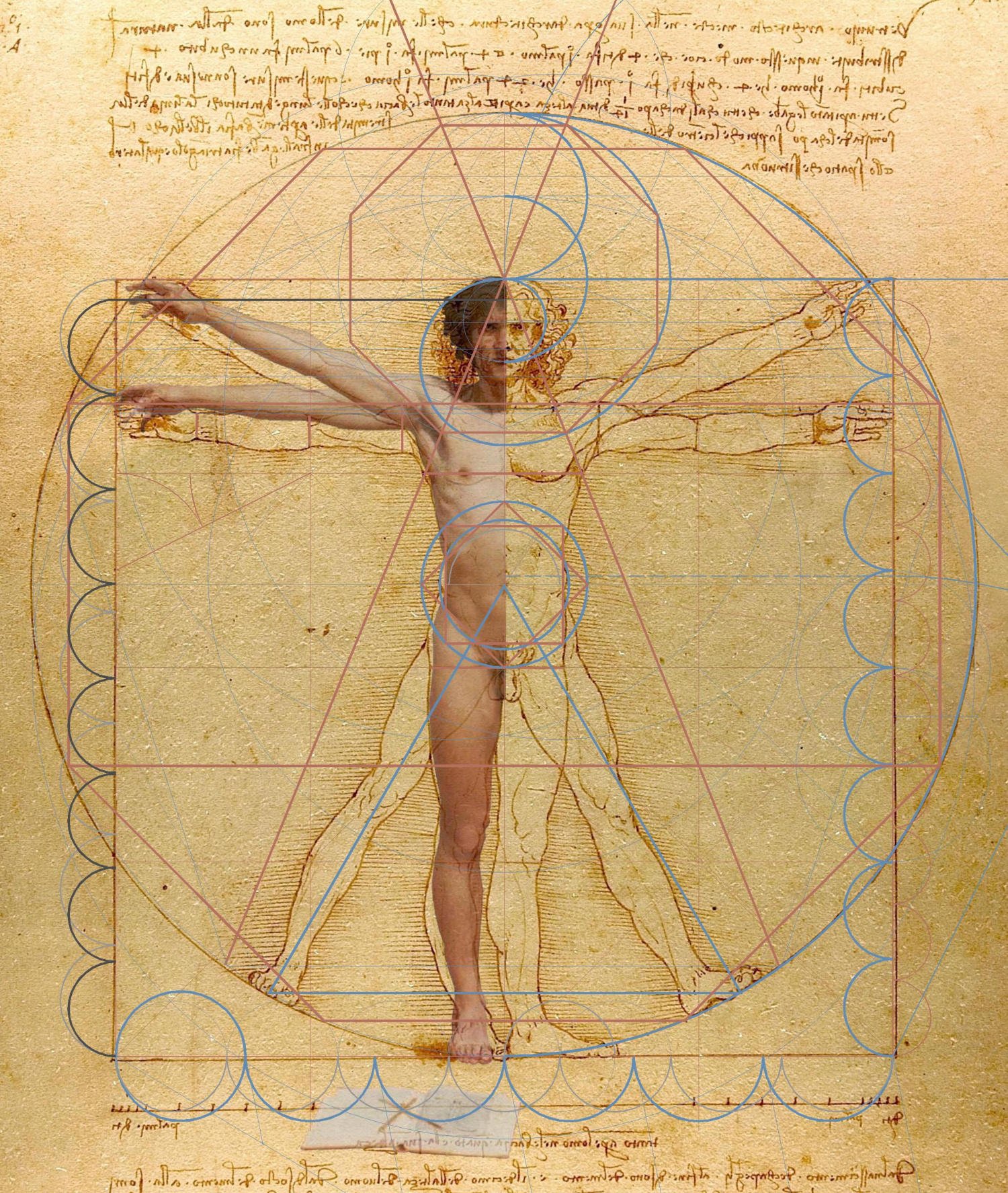
Fig. 4: “L’Huomo di Vitruvio” and the Golden Section (Drawing: © Josep Gonzàlez)
LLeonardo,
like
his
contemporaries,
investigates
and
brings
a
new
vision
to
Vitruvius’
text,
of
which
no
drawing
or
graphic
scheme
has
come
down
to
us.
He
joins
the
circle
with
the
square
but,
unlike
Alberti
and
others,
he
does
not
center
it
on
the
man’s
sex,
like
the
square,
but
moves
it
toward
the
navel,
precisely
where
the
most
celebrated
proportion
is
fulfilled.
And
with
a
ratio
of
5/3
(1.66666…),
that
is,
an
approximation
to
the
use
of
the
golden
number
(1.618033…),
he
rescues
a
dichotomy
known
since
antiquity,
“the
squaring
of
the
circle”,
that
is,
the
rectification
of
the
celestial,
the
circle,
into
the
earthly,
the
square.
To
this
end
he
tries
to
interpolate
all
the
mathematics
known
to
him
and,
following
the
Roman
Architect,
draws
one
of
the
most
celebrated
drawings
in
the
history
of
art.
But
his
use
of
it
comes
to
him
from
the
architects
who
belong
to
the
ancient
vow
of
silence.
He
uses
the
same
invisible
Canon
that
governs
the
splendor
of
the
beautiful,
and
that
contains
that
Divine
Luminitas
of
the
pentalpha.
And
he
studies
one
of
the
most
important
visual
and
aesthetic
systems
of
antiquity,
that
of
Proportion,
which
the
Greeks
called
analogy
(αναλογία),
a
concept
which,
as
the
roots
of
the
word
well
express,
means
relation
and
logos.
That
is,
Reason,
first
and
last,
as
Kant
would
say,
the
Pater-Cronos,
or
epicyclic
Saturn,
which
is
ultimately
the
Episteme
(ἐπιστήμη)
of
the
Logos.
Without
delving
into
the
antediluvian
roots
of
number
and
proportion,
the
Logos
manifests
itself
as
a
relatio
between
the
invisible
and
the
visible.
That
is,
a
relation
between
worlds,
in
all
their
senses
and
dimensions.
This
door
that
joins
the
celestial
with
the
material,
the
sacred
with
the
profane,
is
reduced
to
an
irrational
number
that
both
the
Egyptians
and
the
Greeks
knew,
not
by
its
arithmetic
figure
but
by
its
geometry
and
by
the
hylomorphism
(from
the
Greek
Hyle
[ὕλη],
matter,
and
morphe
[μορφή],
form)
that
brings
about
that
harmonic
capacity
between
the
carnal
and
the
spiritual,
between
matter
and
form,
an
Aristotelian
concept
which
medieval
scholasticism
restricted
to
the
rank
of
order
and
figure.
The
language
of
this
relation
is
mathematics,
which,
paraphrasing Plato, is Geometry, that is, the language of God.
However,
it
is
the
architecture
of
the
Middle
Ages
that
keeps
encrypted
in
its
“Royal
Art”
the
geometric
and
mystical
aphorisms
of
the
Golden
Number,
which
I
would
dare
to
call
Orphic,
and
in
whose
hermeticism
the
basic
principles
of
creation
are
found.
For
every
sacred
work,
before
being
built,
was
architectural
thought,
forged
by
a
spirit
whose
entity
permeates
all
the
constructive
and
figurative
resources
that
will
make
it
possible.
This
spirit
underlies
not
only
what
is
built
and
materially
ordered,
but
also
fecundates
the
Soul,
which
is
the
giver
of
life,
being
capable
of
generating
both
the
House
of
God
and
that
of
men,
and
building
upon
the
face
of
the
earth
for
the
living
as
well
as
for
the
dead.
And
far
from
any
modern
definition,
elusive
of
those
attributes
that
would
have
architecture
be
functional
and
at
the
same
time
beautiful,
or
that
place
it
halfway
between
the
semiotic
and
the
symbolic
only
to
end
up
turning
it
into
that
absurd
and
peripatetic
wink
of
the
“machine
for
living”
or
“for
dwelling”,
architecture
exists
only
if
it
is
the
emanation
and
materialization
of
the
creative
Word.
And
its
hierophant,
the
architect,
is,
or
rather
was,
a
medium
and
dowser,
heir
to
that
priesthood
that
knew
how
to
understand
the
forces
of
nature,
working
according
to
its
laws,
without
dishonoring
the
order
of
the
Mother
goddess,
Nature,
and
channeling
the
immense
and
poliorcetic
forces
that
forge
prime
matter
in
its
athanor.
For
to
build
is
a
thaumaturgic
act
and
means
“to
create
together”,
that
is,
to
“unite”
the
worlds.
It
is
therefore,
before
being
a
science
of
matter,
a
prescience
of
the
immaterial.
And
it
is
precisely
the
immaterial
that
fecundates
it
with
that
radiant
aura
that
impels
us
wherever
we
encounter
its
works.
Consider,
for
example,
the
cathedrals,
the
first
conceived
in
the
crossed,
dual
and
angelic
style
of
the
Gothic.
Gothic
and,
par
excellence,
Goetic,
for
it
is
the
spirit
that
pushes
matter
to
withdraw,
opening
itself
to
the
Light
and
raising
its
watchtowers
toward
the
heavens.
Here
too,
and
especially
in
the
conception
of
the
building’s
initial
layout,
the
golden
number
comes
to
embroider
the
master
parts
that
are
the
symbolic
structure
of
the
act
of
foundation
(Fig.
1-5-6).
Saint-Denis,
Chartres,
Notre-Dame
de
Paris,
Reims
or
Amiens,
Cathedrals
of
victory
over
the
chaos
of
duality,
replace
classical
word
and
topology
with
Geometry,
which
is
omniscient
Light.
And
their
masters,
unknown
operative
masons,
immersed
in
that
spirit
of
scholasticism
in
which
the
Trivium
and
the
Quadrivium
organized
not
only
worship
but
also
the
gaze
of
the
excellent
vitraux,
those
diamantine
canvases,
pregnant
with
the
Color
and
Light
of
redemption,
which
seem
to
remind
us
of
those
words
of
Aristotle:
“what matters is the work and not the craftsmen”
DIVINE ARCHITECTURE

RVM


PREVIOUS FOLLOWING