

The
phoenix
is
one
of
the
most
popular
legends
of
all
history,
a
myth
which is still one of the symbols of today.
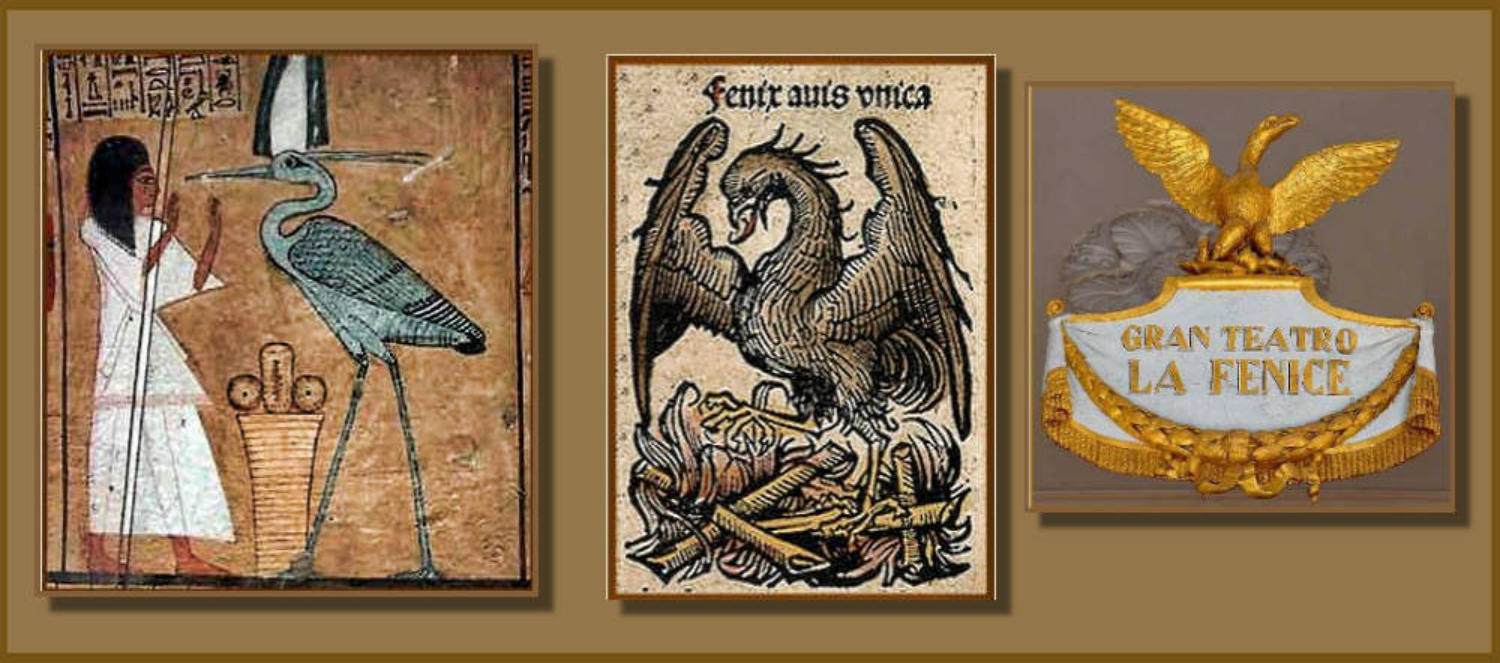
We
find
the
first
references
to
Egypt,
in
the
personification
of
the
solar
divinity
received
the
name
of
Bennu,
presided
over
the
daily
race
of
the
single
city
of
Heliopolis.
Although
Plutarch
referred
to
the
Phoenix
as
being of Ethiopian origin.
As
a
good
myth
no
one
was
sure
what
it
really
looked
like,
although
it
was
generally
described
as
a
large,
eagle-like
bird
of
great
beauty,
with
the
head
of
a
pheasant,
the
beak
of
a
raptor,
red
wings,
and
incomparable
splendour.
The
Greeks
called
it
Phoenicopterus
(red-
winged),
nowadays
zoologists
have
adopted
this
name
to
designate
the
Flamingos. The Romans referred to it as Sacrum Soli.
Over
time
the
myth
was
adapted
to
different
cultures,
but
the
initial
features
remained
practically
unchanged,
apart
from
its
beauty
it
was
a
bird
that
lived
between
500
and
1000
years,
as
soon
as
it
was
close
to
its
end
it
made
a
nest
with
wood
and
aromatic
resins
that
was
lit
with
the
exposure
of
the
sun's
rays,
immolating
itself
and
on
the
third
day
it
rose
from
its
ashes.
This
symbol
of
the
periodicity
of
death-resurrection
has
been
maintained
in
religions,
in
philosophy
and
in
literature.
In
Rome,
it
represented
the
continually
renewed
life
force
of
the
empire,
and in this sense, it was depicted on coins and mosaics.
In
Christian
symbolism,
it
was
adopted
as
the
basis
of
rebirth,
in
this
case
the
bird
was
born
in
Eden
under
the
forbidden
tree
and
when
Adam
and
Eve
were
expelled
from
paradise,
a
spark
from
the
angel's
flaming
sword
fell
on
the
bird
and
it
then
received
the
gift
of
immortality
through
fire.
In
Christian
texts
it
is
mentioned
in
the
letter
to
the
Corinthians
by
Clement
of
Rome
95-98
AD,
or
Tertullian
in
De
Resurreccione
mortuorum,
in
this
sense
of
death
resurrection
was
adopted
especially
in
the
Middle
Ages
in
paintings
depicting
renewed
life,
and
although
it
was
used
at
the
end
of
the
18th
century
in
the
cathedral
of
Barcelona
in
the
Ephemeral Cenotaph of Charles III 1790.
In
alchemy,
transmutation
takes
place
in
the
Atanor
(Tannu
=
furnace
in
Arabic),
where
the
phoenix
symbolises
the
last
phase
of
the
alchemical
process
of
obtaining
the
philosopher's
stone,
born
of
the
alchemical
fire
of transmutation.
THE PHOENIX







































































RVM