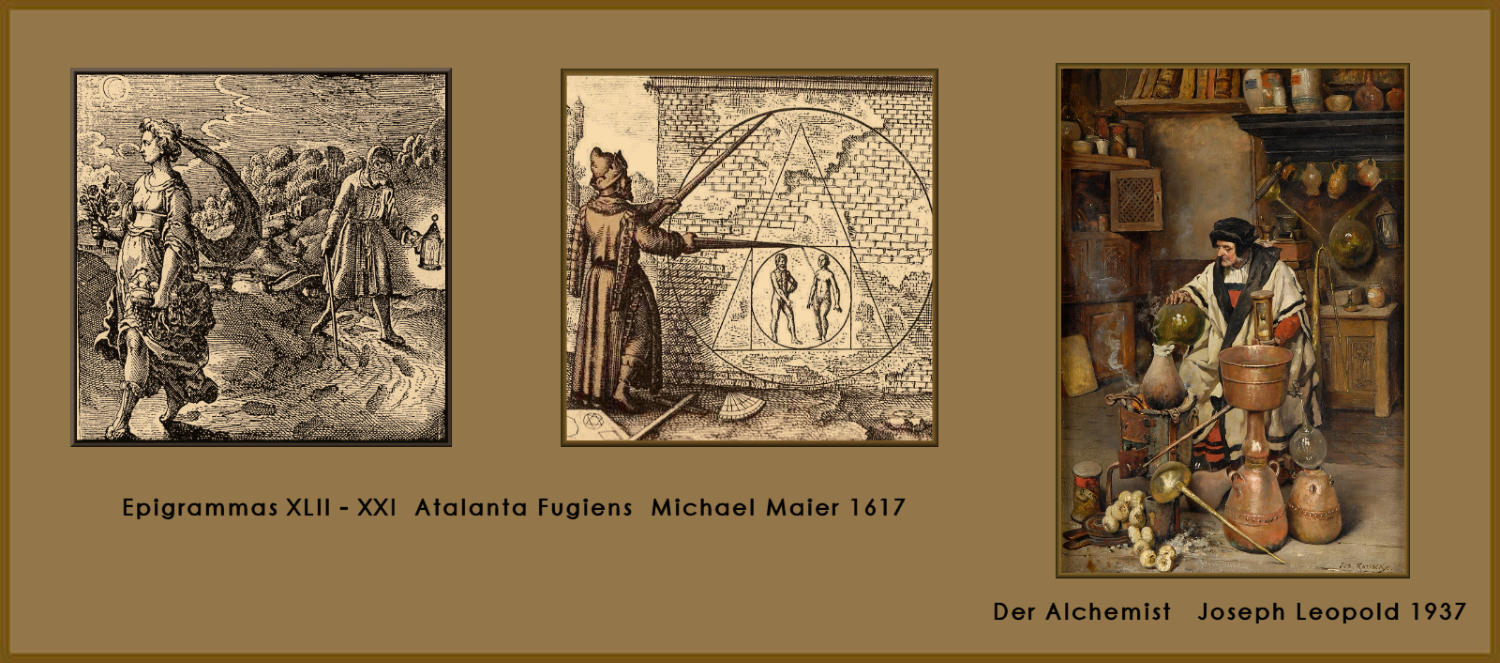

Currently,
we
think
of
Alchemy
as
the
precursor
of
chemistry,
but
it
was
a
multidisciplinary
practice
that
in
its
time
had
much
in
common
with
astrology,
chemistry, medicine, and mysticism.
References
date
to
the
3rd
century
CE,
in
Egypt
and
Greece,
with
its
most
notable
development
in
Alexandria,
expanding
toward
China
and
central
Europe;
its
peak
expression
in
our
continent
was
from
the
13th
to
the
17th
century.
At
first
it
was
generally
a
chemical
process
in
which
the
production
of
gold
was
sought,
and
it
was
not
until
its
arrival
in
Europe
that
it
transformed into a chemical-philosophical process.
The
church
considered
it
a
heretical
practice,
and
the
alchemists,
to
protect
themselves,
hid
it
under
an
amalgam
of
symbols,
and
to
ensure
their
survival
they
carved
them
in
stone,
essentially
in
cathedrals,
so
that
to
the
uninitiated it represented only an artisanal process.
What
truly
interested
the
alchemists
was
the
sequence
of
the
process
itself,
for
according
to
the
doctrine
of
similar,
the
transformation
of
ordinary
metals
into
gold
was
seen
as
a
path
to
the
Great
Work,
i.e.,
the
passage
of
the
spirit from ignorance to illumination.
For
this
they
referred
to
the
possession
of
the
Philosopher's
Stone.
This
stone,
for
them,
was
not
a
physical
object;
it
was
a
metaphor
for
the
inner
potential
of
the
alchemist
and
the
understanding
of
the
purpose
of
the
Work
to achieve the final Robis.
Grillot
de
Givry
referred
to
the
Philosopher's
Stone:
“You
will
not
obtain
the
stone
until
you
are
perfect,
and
you
will
never
be
perfect
if
you
seek
the
stone
for
the
riches
that
accompany
it.”
The
description
of
the
process
is
too
long
and
complex
to
summarize
here,
but
the
aim
was
to
spiritually
attain
what
they
called
Robis,
or
the
primal
being
of
creation
before
its
fall,
the
Androgyne
Adam
that
represented
the
original
unity
of
masculine
and
feminine principles before the divine punishment.
Human
perfection
can
only
be
found
in
the
divine
image
of
its
Creator.
Adam
and
Eve
would
be
nothing
more
than
the
result
of
a
rupture
or
deification,
where
the
primordial
Adam
became
Adam
and
Eve.
When
Genesis
tells
us
that
Eve
was
created
from
Adam’s
rib,
it
means
that
the
human
being
was
originally
undifferentiated
and
that
he
constantly
seeks
this
lost
unity
or
endowment.






































































THE ALCHEMY

RVM