

It
is
not
possible
to
define
these
festivities
symbolically.
History,
myth,
legend,
and
symbols
have
been
exchanged
between
cultures,
by
affinity
and
sometimes
by
imposition,
in
an
evolutionary
(or
involutionary)
process,
with
strong consumerist connotations.
Ancient
cultures
in
one
way
or
another
already
celebrated
the
passing
of
the
winter equinox, the sun rose earlier, and the day began to grow longer.
The
Roman
people
were
the
ones
who
gave
more
relevance
to
these
periods,
on
the
one
hand
at
this
time
they
already
celebrated
the
so-called
Saturnal
festivities
with
different
customs
such
as
freeing
a
slave,
then
at
meals with family and friends, they exchanged gifts.
A
few
days
later
they
celebrated
the
beginning
of
the
new
year
in
honour
of
the
god
Janus,
this
was
a
god
of
Indo-European
origin
and
in
Rome
he
was
considered
the
god
of
the
beginning
of
all
things
and
all
doors
were
consecrated
to
him,
the
first
day
of
the
year
was
dedicated
to
him
and
later
the first month took his name Januarius (January for us).
He
was
depicted
with
two
opposite
faces,
one
facing
forward
and
one
backward,
with
a
key
in
his
hands
or
a
key
and
a
rod.
By
the
3rd
century
AD
the
emperor
Aurelius
declared
December
25
a
feast
of
the
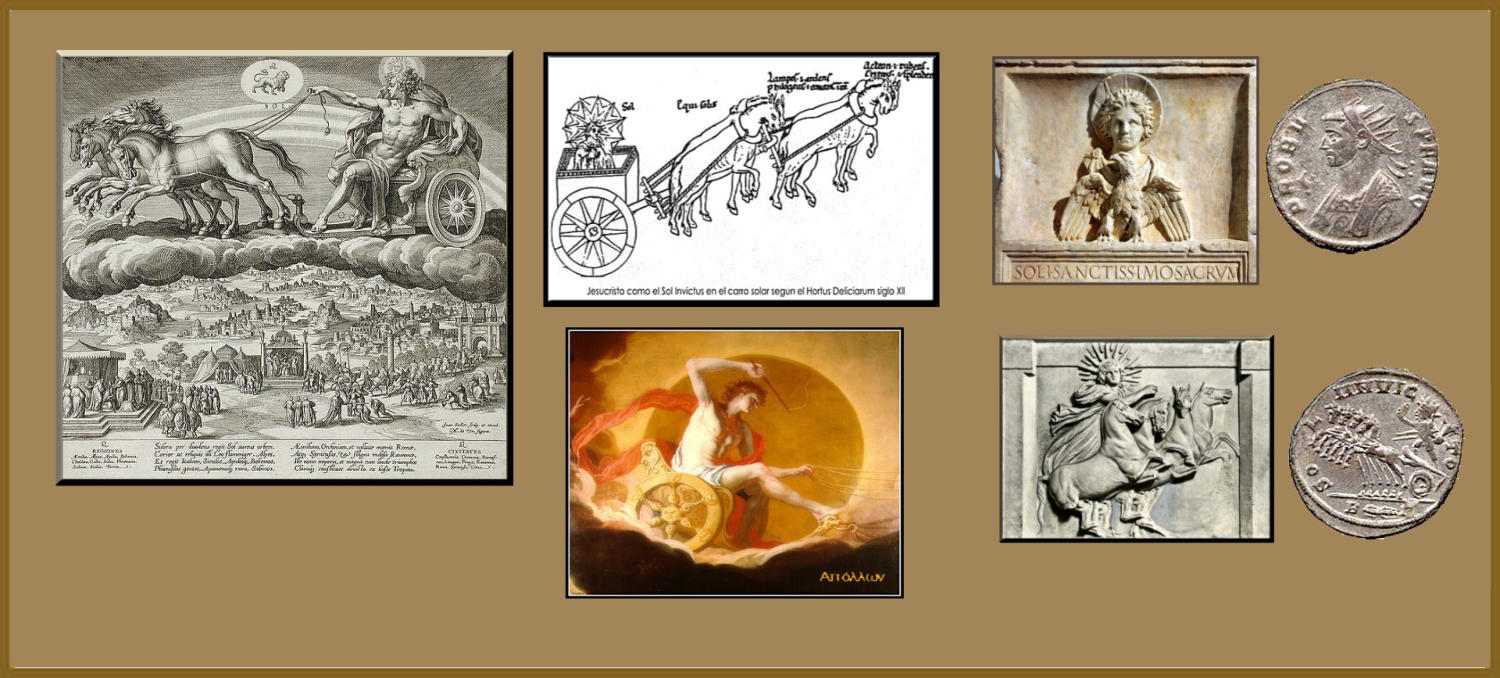
undefeated
sun
Natalis
Solis
Invictus,
(in
Julius
Caesar's
calendar,
in
the
year
45
BC
the
winter
solstice
coincided
with
the
25th
of
the
Gregorian
calendar).
Towards
the
4th
century,
Emperor
Constantine,
needing
to
Christianise
the
empire
and
not
being
able
to
suppress
all
the
pagan
festivals,
reoriented
them
towards Christianity.
The
exact
date
of
the
birth
of
Jesus
was
not
known,
nor
is
it
known,
and
it
was
fixed
on
25
December.
Pope
Liberius
decreed
it
official
in
354,
the
feast
of
the
Nativity
of
Jesus,
although
in
325,
the
date
of
the
Council
of
Nicaea,
the
Church
of
Alexandria
already
celebrated
it
on
the
25th,
under
the
name
of Dies Nativitatis et Epifaníae.
Likewise,
the
solstitial
feasts
were
left
to
the
two
Saints
John
and
John
the
Evangelist
on
the
winter
solstice
and
John
the
Baptist
on
the
summer
solstice.
Pope
Noel
(St.
Nicholas
of
Bari),
when
his
parents
died,
distributed
his
entire
fortune
among
the
needy
and
entered
the
priesthood.
He
was
known
for
helping
the
most
needy
and
mainly
children,
patron
saint
of
several
nations
and
especially
venerated
in
Holland,
where
on
his
name
day,
the
sixth
of
December,
there
was
the
custom
of
giving
presents
to
the
little
ones,
in
the
17th
century
the
Dutch
settlers
went
to
America
together
with
their
traditions,
his
name
with
Dutch
phonetically
sounded
sinterklaas,
Father
Christmas
for
the
Americans,
and
finally
the
Coca-Cola
house,
with
its
marketing
gave
him
the current appearance, with the white and red colours of its brand.
In
1843
the
Londoner
Sir
Henry
Cole
made
it
fashionable
to
send
greetings
to
friends
with
a
printed
card
reading
"I
wish
you
a
Merry
Christmas
and
a
Happy New Year".






































































INVICTUS SUN

RVM